Google Reviews for Pest Control Companies: After the Follow-Up Visit
Google Reviews for Pest Control Companies: After the Follow-Up Visit
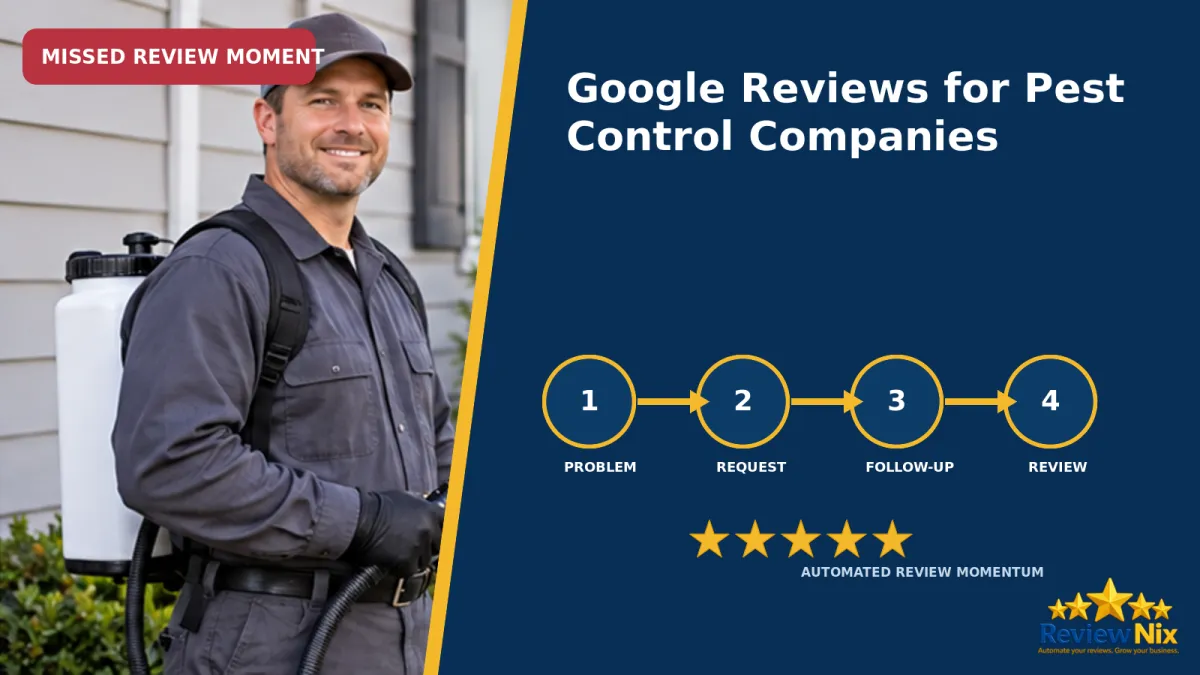
Do not ask for a Google review during the first spray, while the customer is still waiting to see if the problem is gone. Ask after the follow-up visit, when the work you sold as a completed treatment is actually finished and they can describe what they saw. Send a direct Google review link. Ask for an honest review. Do not offer a free extra spray, a waived callback, or any other perk for a rating.
People hire an exterminator in a private moment. They do not want a lecture on the porch, and they do not want a profile that only says “great service” with no hint of whether you showed up for the callback. Pest control Google reviews should read like a finished job, not a sales visit. This page is that timing. It is not a ranking guarantee.
Why pest company reviews get read in the kitchen
A search for a local pest control company usually starts after something was seen: a trail, a nest, a noise in the wall, a unit that failed a restaurant inspection. The reader is standing in their own kitchen comparing three names. They want to know if you explained prep, if you came back, and if the office answers when the problem is not finished. Recency matters because a nest in July is not comforted by a review from a winter exclusion two years ago.
The first visit is often the wrong story. You have sprayed, baited, or set a plan. The customer has not lived with the result yet. A review written in the doorway describes your shoes and your manners. Those matter. They do not answer the question the next caller is asking, which is whether the follow-up happened when you said it would.
Quarterly plans are a different product from a one-time wasp call. If every review talks about “the quarterly guy,” and you also sell one-time work, say so in the profile services, and let customers mention the job type they actually bought. Do not coach them. A restaurant manager writing about a monthly service and a homeowner writing about a garage rodent call are both useful pest company reviews if they are real.
Before you change the technician script, see how the listing looks beside the shops you lose callbacks to. A Reputation Score is a read of that profile, not a forecast. Cleaning companies have a related problem with one-time deep cleans versus a route. Their review timing is after the clean is done. Yours waits for the follow-up that closes the treatment you sold.
The trigger is the follow-up, not the first spray
Sell the plan in writing, then treat the review ask as the close of that plan. For a standard residential issue with a scheduled return visit, send the link after that return, when you have checked what you came back to check. If the problem is still active, the job is not closed. Finish the callback first. That is completeness, not a filter that only texts happy people. Everyone whose job is actually finished gets the same neutral message.
One-time jobs with no follow-up, such as a wasp nest removed and the area made safe the same day, can be asked the day the work is done, after you have left the yard and they can see the nest is down. Do not text from the ladder. Do not ask before you have told them what to expect over the next day or two if activity can linger. Name the job in a few words. Do not promise the species will never return.
Do not ask on the inspection-only visit, unless they paid for an inspection and that inspection was the whole product. A free look under the sink is not a finished treatment. Asking then produces reviews of the sales pitch. If they start service later, ask after the follow-up that belongs to that start.
Recurring accounts should not get a review text after every quarter. Ask after the first completed service visit on a new plan, once you have done what you said you would do on that visit, or after a follow-up that closed a specific issue. Then leave a long gap. A second ask after a year of service, or after a documented extra call you resolved, is plenty. Quarterly nagging makes the route treat you like a billboard.
Commercial kitchens and multifamily contacts are busy and careful about what they publish. Ask the manager or owner after a follow-up they already agreed was the check, not after every tech swipe of a logbook. Do not put unit numbers or pest photos in the request. If a health inspection is still open, wait until your part of that issue is closed and the manager is the one who can speak.
Where the customer is when you send the text
On the first visit they are often in the kitchen, watching the floor, wanting you gone. That is a bad room for a review ask. After the follow-up they are more often at work or in the car, checking a text from a number they already saved. A short SMS fits. A voicemail that says “please leave us five stars” does not.
Apartment tenants may not be the account holder. The property manager booked you. Send the request to the person who hired you, unless a tenant directly paid for a one-time visit and that tenant is your customer. Do not ask a tenant to review a building contract they do not manage. Do not name the building and the unit in a message they might screenshot into a group chat with more detail than they meant to share.
Restaurants and food plants often have a shift lead who met the tech and an owner who pays. The review, if any, should come from the person who can speak for the account. Ask after the follow-up conversation you already scheduled, not in front of a line of customers. Keep the public reply later free of menu items, inspection scores, and staff names they did not write themselves.
What they can mention, and what you should not coach
You do not write the review and you do not hand them a paragraph. If they ask what is useful, point at the visit, not a medical or safety claim. Did you arrive in the window you gave. Did you explain prep in plain language before you treated. Did you respect the kitchen, pets, and kids’ spaces. Did the follow-up happen when you said it would. Did the invoice match the quote, including any extra bait stations they approved.
They can name the general issue in their own words if they want: ants in the kitchen, a wasp nest by the door, mice in the garage. They should not feel pushed to post photos of droppings, a child’s room, or product labels. You should not ask them to say the house is “pest free forever” or that a product is safe for everyone. Those lines are claims. They are not a review of your punctuality.
Do not ask them to hide a callback that is still open. If you are waiting on a part or a second visit, the review can wait until that visit is done. Do not ask them to skip the fact that someone had to reschedule. They can mention it or not. Your job is not to edit their memory.
Technicians should not leave a review card that lists a star count, and should not say “we only need five stars to stay in business.” That sentence is pressure. It also teaches the next technician to skip any stop that felt awkward. Awkward stops still get the same ask once the follow-up is complete, unless the customer has told you to stop.
A manual follow-up habit for a two-tech shop
Copy the Google review link that opens the review box. Test it. Save it on the office phone and in the scheduling notes, not only on the owner’s personal cell. When a follow-up is marked done, the dispatcher sends one SMS the same day to the booking contact. First name, the visit in a few words, one link, a stop line. One reminder the next day if they did not reply and did not opt out. No third message.
Separate the service log from the review list so you are not texting open tickets. A job marked “needs another visit” stays off the send list until that visit closes. A job marked complete goes out, including the quiet customers. Do not wait for a compliment text before you ask. That is how a shop accidentally only invites fans.
Count three things each week: follow-ups closed, requests sent, new reviews. If the first visit volume is high and the follow-up list is empty, you have a scheduling problem, not a review problem. Fix the callback calendar before you automate anything.
- Mark the real finish line: follow-up done, or a one-time job closed the same day.
- Send one neutral text with the direct link.
- Skip open callbacks, estimates, and people who opted out.
- Do not ask after every quarterly stop.
- Reply to new reviews without naming products as promises.
A follow-up text that stays neutral
SMS: “Hi Morgan, this is Harbor Pest. We completed the follow-up visit we scheduled. If you have a minute, an honest Google review helps a neighbor choose a local company. Link: [link]. Reply STOP to opt out.”
Same-day one-time job: “Hi Morgan, this is Harbor Pest. We finished today’s nest removal and we have left the property. If you have a minute, an honest Google review helps someone else in the same spot. Link: [link]. Reply STOP to opt out.”
Email subject: “Follow-up visit done.” Same sentences, no product brochure, no coupon code, no “tell them we solved it for good.” WhatsApp only if they already use that thread with the office. One link. Do not ask them to pick Google or Facebook or a survey.
Reply without turning the thread into a chemistry lesson
Reply within a day when you can. Thank them. If they named the follow-up or the garage, you can echo that. Do not name the product, the concentration, or a treatment plan they did not already write in the review. Do not confirm a unit number, a child’s room, or a restaurant’s inspection result.
If the review says the problem came back, do not debate species in public. Say you are sorry the result was not what they expected, give the office number, and handle the callback offline. Do not offer a free year of service in the reply. Do not post a photo of their property to prove you were there.
A short, calm reply is what the next kitchen reader is judging. They are not hiring you for a public argument about who left a door open. Keep billing fights on the phone.
Incentives and filters that hurt an exterminator listing
Do not waive a callback fee, throw in a free extra spray, or give a gift card for a review. Do not run a referral raffle tied to a star rating. Do not tell a new quarterly customer the first month is free if they review you. Those are incentives. Google does not allow them, and a careful property manager can spot them.
Do not send the Google link only after a customer says the pests are gone, and park everyone else on a private form. Timing the ask to a completed follow-up is not the same thing as sorting by mood. If the follow-up is done, send the same ask. If they are unhappy and the job is closed, they can still review. You reply. You do not hide them.
Do not ask the tech to “only request reviews on good stops.” That instruction is a gate. Do not promise a map ranking if the route reviews you. You cannot promise that. A steady habit after closed jobs is the part you control. The free playbook covers the wording. Keep the pest rule in front: after the follow-up, not during the first spray.
You can keep doing this by hand, or let ReviewNix handle the follow-up
The owner can send these texts from the office when the follow-up ticket closes. That works until the callback board gets thick and the review text is the thing that drops. The listing then fills with first-visit manners notes, or it goes quiet.
ReviewNix connects the Google Business Profile and sends a neutral review request by SMS, email, or WhatsApp after a completed job. For a pest company, wire that trigger to the follow-up close, not the first application, unless the sold job truly ended the same day. The message asks for an honest review and carries the direct link. It does not ask for stars and it does not offer a free service. Reminders go out if they have not finished. Sends stop when they opt out.
The dashboard shows what left the office and what came back, so you can see a tech route that never produces a closed follow-up. AI reply drafts give you a first note. A person still approves it. Drafts must not name treatments, units, or results the reviewer did not write.
Set it up once. Let ReviewNix handle the follow-up. Start on the trial form when the follow-up rule is clear and the dispatch desk cannot babysit every text.
FAQ
Should pest control companies ask for a review right after the first spray?
Not if a follow-up is part of the job you sold. Ask after that follow-up, when the visit is complete. For a one-time job that truly ends the same day, such as a nest removal you finished and left, send the link after you leave the property. Do not ask from the doorway while the customer is still deciding if the work is done.
How often should a quarterly pest customer get a review request?
Once after the first completed service, or after a follow-up that closed a specific issue, then not again every quarter. A later ask after a long stretch of service is enough. Repeated texts after routine stops look like pressure and get ignored.
Can I offer a free extra visit for a Google review?
No. A free visit, a waived fee, or a discount in exchange for a review is an incentive. Ask for an honest review with a direct link. If you need to return for service reasons, that return is part of the job, not a prize for posting.
What do I say if a review names the pesticide or a health worry?
Do not confirm a product plan or argue safety claims in public. Thank them for writing, invite them to call the office, and keep medical or exposure concerns off the thread. Do not post their address, photos of the interior, or a treatment log to defend the visit.