Google Reviews for HVAC Companies: Ask After the Service Call, Not at Booking
Google Reviews for HVAC Companies: Ask After the Service Call, Not at Booking
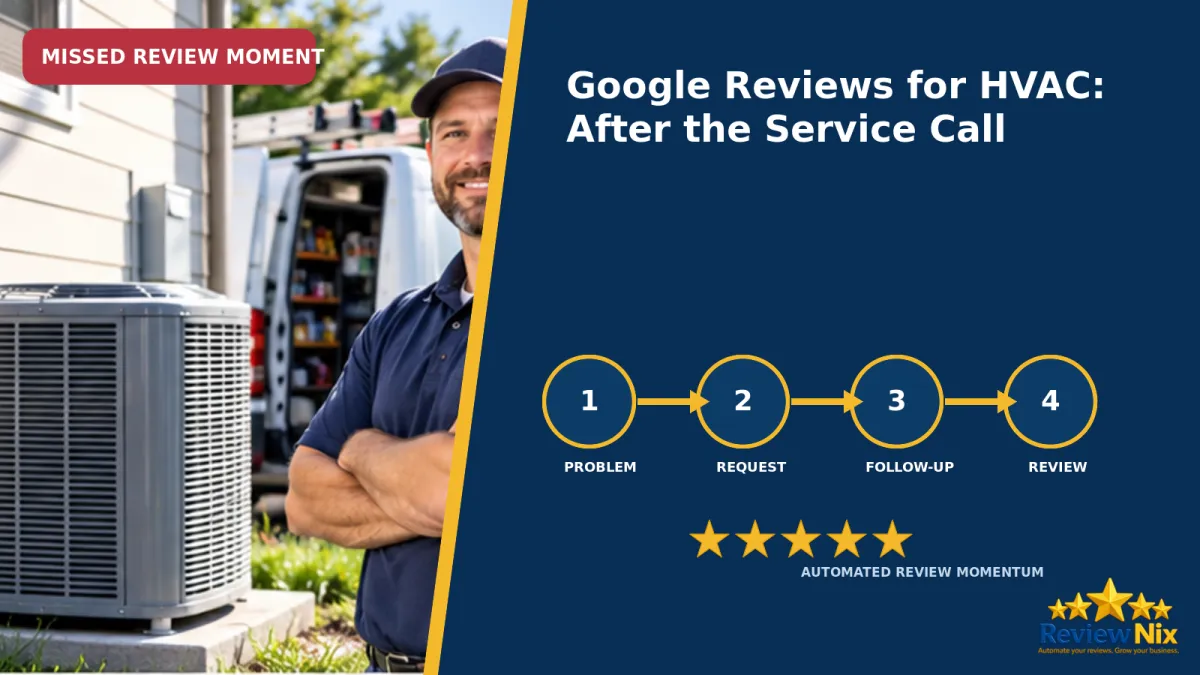
Google reviews for HVAC companies should be asked after the service call is finished, not when the appointment is booked and not while the technician is still in the attic. Send a same-day SMS with a direct Google review link once the truck has left and the system is running. Do not ask for five stars. Do not offer a filter, a tune-up discount, or a membership month in exchange for a review. The booking call is a promise. The review is about the visit that already happened.
HVAC offices lose reviews in the handoff. The coordinator books the call, the tech closes it in the app, and nobody texts the homeowner. By the next heat wave the visit is forgotten, or it is remembered only if something failed. The ask belongs on the completed ticket. The timing companion is best time to ask for Google reviews.
Which HVAC visits are done enough to ask
A repair that is tested and running is done. The capacitor is in, the contactor is seated, the homeowner heard the system start, and the tech has explained what failed. That is the moment. Send the text after the tech is off the property, not in the driveway while they wait for a signature. A text that arrives while the tech is still talking feels like a pitch. A text twenty minutes later feels like a receipt.
A diagnostic with no repair is a completed visit if they paid for the diagnosis and the tech left a clear next step. You may ask. Do not ask them to praise a quote they have not accepted. If they declined the repair, a neutral review request is still allowed. Do not skip them because they did not buy the replacement. Skipping the “no” jobs and texting only the people who said yes is gating by wallet.
Maintenance and membership tune-ups are completed visits. Ask after the first completed visit on a new agreement, not on the signup call and not on every monthly draft. Recurring customers do not need a request after every filter change. Once after the first good visit, then again after a repair that actually happened, is enough. A membership that emails “rate us five stars to keep your discount” is an incentive. Leave the membership price on the membership.
Replacements and change-outs are not done at deposit, at permit, or on the day the old unit comes out if you still owe a return trip. Ask at the final walkthrough, after startup, when the homeowner has the thermostat in their hand and the crew is gone. A review posted on deposit day reads like a bought note, because the work is not in the house yet. If there is a punch-list callback, ask after that callback is closed, not while the thermostat is still wrong.
After-hours no-cool and no-heat calls are the reviews people actually read. The homeowner was uncomfortable. The tech showed up. Ask the same day, after the house is stable, even if the permanent part arrives tomorrow. If you only stabilized and will return, say that in the text only if you must, and still do not script their review. A second request after the return visit is optional. Do not send three texts because the job had three trips.
Who sends the text, and the words on it
Season changes the volume, not the rule. Heating contractors in a cold snap and air conditioning companies in a heat wave see the same failure: the review request is the step after the system is running, and it is the first step dropped when the board is full. Air conditioning Google reviews and heating contractor reviews are the same profile in most shops. Do not build a separate ask for summer and winter. One completed-ticket text covers both.
The dispatcher or the office closes the loop. Techs are good at the work and bad at remembering a review ask at 8 p.m. Give them one spoken line if the homeowner is standing there: “The office will text a link if you want to leave an honest Google review later. No pressure either way.” Then the office sends the SMS when the ticket is marked complete. If the tech must send it, the link is a saved shortcut, not a maps search they rebuild in the truck.
Use this SMS: “Hi, this is [shop] in [city]. Thanks for having us out today. If you have a minute, here is a direct link to leave an honest Google review: [link]. Reply STOP to opt out.” That is the whole message. No star emoji. No “it helps our small family business more than you know.” No photo of the tech pointing at the unit unless the homeowner already agreed to a job photo, and never inside the review text as a demand.
The link has to be the review form from the listing homeowners already see on Maps. Copy it from Get more reviews on that profile. HVAC brands collect spare listings: the old name, the owner’s personal name, the “emergency” pin. One link, the one with the reviews you quote on the phone. How to copy it is in how to create a Google review link. Test it on a personal phone before it sits in the office template all summer.
One reminder the next day is enough if they have not opted out and have not left a review. Then stop. A third text about a capacitor replacement is how a normal customer blocks the shop number. If they reply with a complaint, do not paste the review link again. Call them about the system. The review can wait.
Scripts for the call types that go wrong
The booking call. The coordinator does not ask for a review when they take the credit card to hold a slot. There is no visit yet. A review request on a confirmation email is noise, and it trains people to ignore the later, real ask. Confirmation emails confirm the window, the address, and what to clear around the unit.
The “we’ll think about the replacement” visit. The tech does not ask for five stars on the quote. If the office sends anything, it is the same neutral completed-visit text, or nothing until they decide. Do not write “review us and we will knock $200 off the condenser.” That is an incentive and a bad sales tactic. Price the job on the proposal.
The angry no-cool callback. Reply to the phone call first. If a one-star shows up, answer it in public without a fight: sorry the visit missed, call the office, we will look at that job. Do not write the part number, the previous tech’s name, or “you should have changed the filter” under the stars. The reply pattern for hard reviews is in how to respond to negative Google reviews. Then keep asking other completed jobs. One bad review is not a reason to ask only the happy tune-ups.
The commercial account. Ask the person who was on site, not a blast to the facilities alias if that inbox is a committee. Same neutral link. Do not mention the contract value. Do not ask every tenant in the building. One completed job, one contact who saw the work.
A home-service shop in another trade, a Houston garage-door company, said it this way after they changed the follow-up and not the work: We didn’t change the service. We changed the follow-up. They went from 38 to 59 Google reviews in 45 days, at 15.9% request-to-review, and rating moved from 4.6 to 4.7. That is not an HVAC result and it is not a forecast for your summer. It is proof that the ask, after a finished job, is the lever. Your lever is the same shape: ticket closed, text sent, no star demand.
A dispatcher checklist for the board
Print this next to the dispatch screen. It is the whole HVAC review habit. If the review text is not on the same close-out list as parts used and payment collected, it will not survive a 100-degree afternoon. A binder in the warehouse does not get opened when the coordinator is covering two boards. Keep the steps short enough to finish between tickets.
- Ticket status is complete, not “en route” and not “quote sent.”
- The system was tested or the customer declined further work after a real visit. You are not asking a lead.
- The phone number is the mobile they answer, and they have not opted out of texts.
- The SMS template is the neutral one, with the review-form link, not a maps pin.
- The send goes out after the tech leaves, the same day, during waking hours. A 11 p.m. text for a 9 p.m. finish can wait until morning. Do not wait until Friday’s admin block.
- One reminder the next day, then done. Complaints go to a human callback, not to another review link.
- Whoever owns reviews replies within a day, including tune-up thank-yous. Recent replies tell the next homeowner a person is there. They do not guarantee a map rank.
If the public profile looks busier in your head than it does on a stranger’s phone, check your Reputation Score against the listing customers open. Use the free playbook for the request wording your coordinators can keep, then strip any line that asks for a star count before it goes into the SMS tool.
The office can text by hand, until the board gets busy
You can run this with a saved SMS and a rule on the close-out screen. Many two-truck shops should start there. The breakdown is July, when every no-cool ticket closes after dinner and the review text is the step that gets skipped. That is an operations problem, not a Google problem.
ReviewNix connects the Google Business Profile and sends a neutral SMS, email, or WhatsApp request when the job is complete. It does not fire at booking. Reminders respect stop and opt-out. The dashboard shows what went out, so a quiet week is visible before the review count stalls. AI reply drafts help the owner answer last night’s reviews before the first call of the morning, and a person should still send the note, especially if the review names a no-cool call or a price. The software does not change the repair. It handles the follow-up the dispatcher drops when the board is red.
Set it up once. Let ReviewNix handle the follow-up. Start on the trial form if you want the after-service text tied to completed HVAC tickets instead of a clipboard in the warehouse.
FAQ
Should HVAC companies ask for a Google review when the call is booked?
No. The appointment is not the experience. Ask after the visit is complete and the technician has left. A confirmation text can include the window and what to move away from the unit. It should not include a review link or a request for stars.
What if the homeowner did not buy the new system?
If they paid for a real diagnostic and the tech left, a neutral review request is fine. Do not withhold the Google link because they declined the replacement, and do not offer a discount on the new unit in exchange for a review. Those are two different decisions. Price the equipment on the proposal. Ask for an honest review only if you ask everyone the same way.
Can the technician ask in the house?
One sentence is enough, and it should not demand a rating. The link should still arrive by text after they leave, so the homeowner is not watched while they type. Do not hand them the shop tablet on the shop’s Wi-Fi. Their review should come from their own phone and their own Google account.
How soon after an install should we ask?
After final startup and walkthrough, when the crew is gone and the system has been shown to the homeowner. Not at the deposit, not when the old equipment leaves, and not before a known return trip is finished. If the thermostat is still wrong, fix that first. Then send the same neutral link you use for a repair, with no star ask and no incentive.