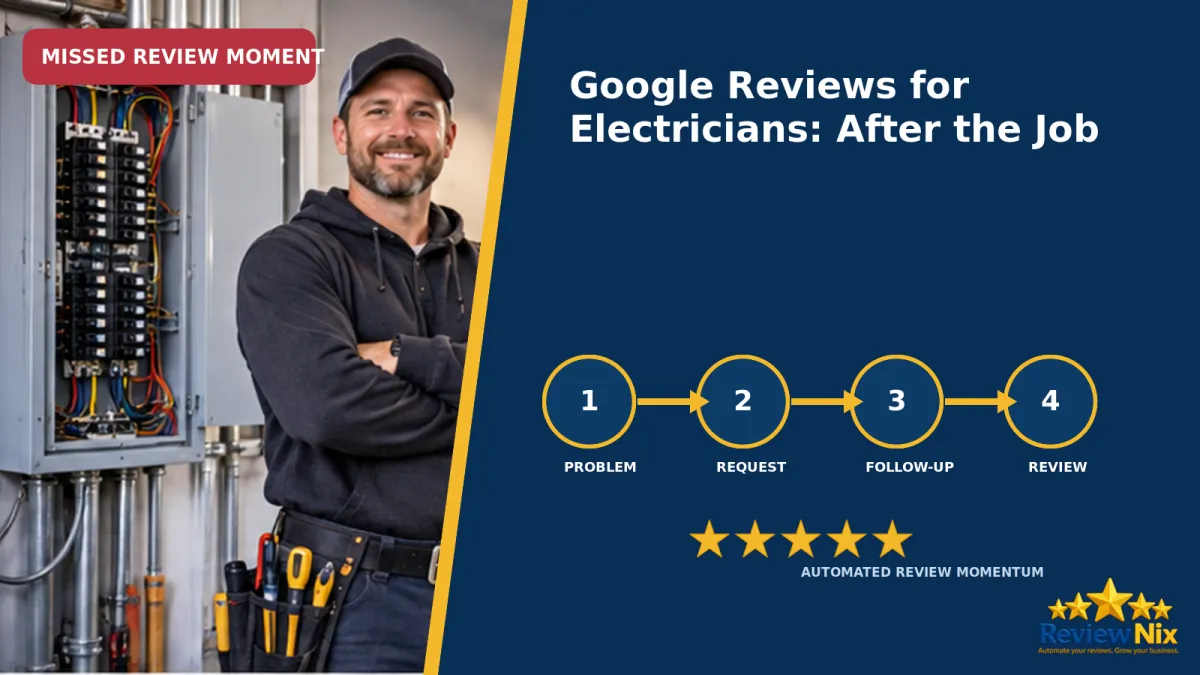
Google Reviews for Electricians: Same-Day Ask After the Panel or Outlet Job
Google Reviews for Electricians: Same-Day Ask After the Panel or Outlet Job
Send the Google review request the same day the electrical job is finished, when the tester is packed and the customer has seen the lights, outlets, or panel work as you left them. Use a direct Google review link. Ask for an honest review. Do not ask for five stars, do not offer a discount, and do not wait until the invoice is a week old. A short SMS after a completed outlet, fixture, or panel job is how electricians get Google reviews that match the work a neighbor can still picture.
Homeowners do not hire an electrician because a brochure looked tidy. They hire the person who will open the panel, pull a permit when the job needs one, and leave the house safer than they found it. That decision happens on a phone, often in a garage or a hallway, while they compare nearby listings. Recent electrician Google reviews are the public record of whether you showed up, explained the work, and cleaned up. This page is the operating habit, not a ranking promise.
Why electrician Google reviews get read before the call
A homeowner searching for a local electrician is usually not browsing. The breaker tripped again, a new range will not run, or an EV charger has a date on the calendar. They open three Google Business Profile listings and read the last reviews, not the oldest five-star block from 2019. Electrical contractor reviews that name a panel, a kitchen circuit, or a smoky outlet tell them the shop does the work they need today.
The work itself is easy to miss. A new outlet sits flush. A panel upgrade looks like a gray box. Nobody walks a house showing friends the inside of a junction box. The review is the only place a stranger can see that you labeled breakers, put covers back, and explained why a shared circuit was the real problem. Silent work needs a written trail.
That is different from a trade where the result is on the curb. A painter leaves color. A landscaper leaves a yard. An electrician often leaves a quiet house. If you only collect reviews after the rare big rewire, the profile looks thin next to shops that ask after ordinary service calls. Ordinary calls are most of the year. They are also what searchers recognize.
Reviews will not replace a license, insurance, or a clean bid. They also will not rank you by themselves, and nobody can promise a map position. What they do is answer the question the caller is already asking: did this person do this kind of job for someone nearby, and did the owner answer when something was off. Check how your profile reads next to the shops you actually lose jobs to with a Reputation Score before you change the script.
If you also run plumbing crews, keep that ask on its own page. A plumber review habit starts when the water is back on. Yours starts when the tester is in the bag and the circuit you touched is working. Do not paste one template across both trucks.
When to ask: tester packed, not two days later
The trigger is a completed job, not a booked job and not a “we will swing back sometime” job. Outlet replacements, fixture swaps, smoke-detector installs, and most troubleshooting calls are done when you have tested what you touched, put the covers on, and told the customer what you found. That is the moment to send the link. Two days later they are at work. The trip is a receipt, not a story.
Panel upgrades and service changes are still same-day asks if the panel is live, labeled, and the customer has walked the main circuits with you. Do not ask at the rough-in, and do not ask while a permit inspection is still the thing standing between them and a finished job. If the city has to sign off before you call it complete, send the review request after that inspection passes, the same day you text them the result.
Emergency calls are short and emotional. Power is out, a breaker is hot, or they smell burning. Do not text a review link while you are still in the truck or while the panel is open. Restore what you can, explain what is safe to use tonight, pack the tester, then send the message after you leave the driveway. Gratitude fades. So does the memory of how you priced the trip. Capture the visit, not the panic.
Do not ask on the estimate visit unless you actually completed paid diagnostic work they agreed was the job. A free look in the attic is not a finished service. Asking then trains people to review the sales call, not the work. If they hire you later, ask after the install.
Where the customer is when the message lands
Most of your buyers are standing in the room you just left. Kitchen. Garage. Basement. A hallway with the panel door still ajar. Their phone is already out because they were texting you about the gate code. A one-link SMS fits that room. A long email with three attachments does not.
Property managers are a different room. They are in an office or a truck, juggling units. Name the property and the unit in your private notes, not in the public review reply later. The review request can say “today’s outlet repair” without a tenant name. Commercial site contacts often forward the text to a boss. Keep it short enough to forward.
A wife or husband who was not home often pays the bill and writes the review. If you only talked to the person who opened the door, still send the request to the contact who booked the job. They asked the question. They are the one comparing you to the other shop.
What they can mention, without a scripted review
You do not write the review. You also do not hand them a paragraph to paste. You can tell them an honest note about the visit helps the next homeowner. If they ask what is useful, point at facts they already saw. On time or late, and whether you called. Whether you explained the breaker or the shared circuit in plain language. Whether the area was swept and the covers were back on. Whether the price matched what you said before you started extra work.
Useful detail looks like this, in their words, not yours: “Replaced two kitchen outlets and found the circuit sharing the microwave. Labeled the panel. Quote matched the invoice.” That kind of line helps a future caller decide. “Great guy, five stars” does not help them, and you should never ask them to type a star count.
They can mention the type of job if they want: EV charger, ceiling fan, panel, generator inlet, bathroom fan, lighting. They should not feel pushed to publish a photo of the open panel, the serial number, or a piece of mail on the counter. If you want job photos for your profile, ask separately and get a yes. Do not bury a photo request inside the review text.
Do not ask them to say you are the cheapest, the fastest in the city, or “the only licensed shop.” License is something you put on the profile and the truck. A customer can say you showed a license if they asked. They should not be coached to invent credentials.
Never ask them to omit a problem. If a box still needs a part, say so on the invoice and come back. A review written before the missing breaker arrives is a review of an unfinished job. You will spend the reply explaining yourself.
A manual week you can run without software
You can do this with a notes app and the link Google gives you. Open your Google Business Profile, use the option to get more reviews, and copy the short link that opens the review box. Test it on your phone. If it dumps them on a map pin or a search page, it is the wrong link. Save the working link in the truck tablet, the office phone, and the office computer. One link. One listing. If you have two profiles, you have a problem to fix before you ask anyone for anything.
Each night, look at today’s completed work orders. Skip estimates, skipped stops, and jobs waiting on parts. For each finished job, send one SMS to the booking contact from the shop number they already know. Include their first name, the job in a few words, and the link. Add a stop line. Then stop. One reminder the next day is enough if they did not reply and did not opt out. A third text is nagging.
Say the same thing out loud before you leave, then text it so they do not have to remember. A card on the panel door gets recycled. The text is the ask. The office should not wait for Friday to “do reviews.” Friday is when the memory is gone and the technician is already on another street.
Track three numbers on a clipboard: requests sent, links that got a reply, new Google reviews that week. You do not need a fancy funnel. You need to see whether the truck is actually sending the message. If you send none, you will get none. If you only send them after compliments, you are selecting by mood. Send after every completed job.
- Copy the direct Google review link and test it.
- Decide the trigger: tester packed, job marked complete, inspection passed if that was the finish line.
- Send one neutral SMS the same day to the person who booked.
- Send one reminder if they did not answer and did not say stop.
- Reply to every new review yourself, the same day you see it.
Words you can copy for the after-job text
SMS: “Hi Jordan, this is Northside Electric. We finished the kitchen outlets today and the tester is packed. If you have a minute, an honest Google review helps a neighbor pick a licensed electrician. Here is the link: [link]. Reply STOP to opt out.”
Email, only if they do not text: subject “Today’s electrical visit.” Body: “Hi Jordan, we finished the work we scheduled today. If you want to leave an honest Google review, this link opens the form: [link]. No need to reply to this email unless something still needs a fix. Call the shop number on the invoice for that.”
WhatsApp, only if that is how they already talk to the dispatcher: same sentences, same single link, same stop option. Do not add a second link to Yelp, Facebook, and a form. One path.
Do not write “leave us five stars if we earned it.” Do not write “only if you were happy.” Do not attach a coupon. Do not ask them to copy a paragraph you wrote. The point of the message is the link and a clear exit.
How to reply without turning the panel into a fight
Answer in public within a day when you can. Thank them. Name the job type if they named it, in their words, not a diagnosis of the house. “Glad the kitchen circuit is labeled” is fine. A paragraph about their amperage, their insurance carrier, or the age of their wiring is more than a stranger needs.
If the review is hard, stay short. Acknowledge the visit. Offer a phone number. Do not argue about a trip charge in the thread. Do not post photos of their panel to prove you were right. Future callers are reading to see whether you get loud when something goes wrong. A calm reply is the whole job.
Do not offer a discount in the reply. That reads as payment for a rewrite, and Google does not allow incentives for reviews. Fix the work if it needs fixing. Talk about the invoice offline.
Assign one owner. The technician can draft. The owner sends. A copied “Thanks for choosing us” on every review tells a careful reader nobody is home. Mention the neighborhood or the job type only when the reviewer already did.
What to skip so the listing stays clean
Do not buy reviews. Do not ask employees, cousins, or the supply house to pose as customers. Do not gate the ask so only smiling customers get the Google link and upset customers get a private form. That split is a filter. The clean rule is one ask after completed work, same words, same link.
Do not pay, discount, gift, or “waive the trip fee” for a review. Do not run a raffle. Do not tell them a five-star review gets them on a priority list. Those are incentives. They put the review and the profile at risk, and they make the next honest review harder to trust.
Do not ask during the live work, with the panel open, while they feel they have to say yes to get the cover back on. The text after you leave is the respectful version of the same request. Do not stand in the kitchen and watch them type.
Do not promise you will show up first on Maps if they review you. You cannot control that, and the claim is false comfort. Recency and a steady habit matter more than a speech about rankings. If you want the longer checklist on asking without pressure, use the free playbook and keep the electrician trigger intact.
You can keep doing this by hand, or let ReviewNix handle the follow-up
The owner can keep sending these texts from the truck. Plenty of two-person shops should start there. The failure mode is not the wording. It is the night the dispatcher is short, the technician is late, and nobody sends the link. The review never happens, and the profile stays stuck on last spring’s kitchen job.
ReviewNix connects the Google Business Profile, then sends a neutral review request by SMS, email, or WhatsApp after a completed job. The message asks for an honest review and includes the direct link. It does not ask for a star count. Reminders go out if they have not finished, and they stop when the person opts out or tells you to stop. You still choose the trigger. For an electrical shop, that trigger is the completed service call, not the estimate and not the open permit.
The dashboard shows what went out and what came back, so you are not guessing which crew remembered. AI reply drafts give you a first pass in your own voice. A person still approves the reply. Drafts do not post themselves, and they should not paste technical details the reviewer did not share.
Set it up once. Let ReviewNix handle the follow-up. Start on the trial form when the manual habit is clear and the nights are too busy to trust memory.
FAQ
Should electricians ask for a Google review after every outlet call?
Yes, after the work is finished and tested, including ordinary outlet and fixture calls. Those jobs are what most neighbors search for. Skip estimates and jobs waiting on parts. Do not skip small jobs because they feel minor. A panel upgrade is not the only review that matters. The same neutral text, with the job named in a few words, works for both.
Can I ask only customers who said the work was great?
No. That is selective asking. Send the same request after every completed job. If something is still broken, finish the repair, then ask. Do not send happy customers to Google and send unhappy customers to a private survey. One path, one link, an honest review, and a clear way to stop.
What should I do if a review mentions a code issue or a permit?
Reply briefly. Do not debate the code book in public. If the work was permitted, you can say the inspection result in plain language if that fact is already public or already on their paperwork. Invite them to call the office. Do not post their address, their panel schedule, or a photo of the open gear to win the argument.
Is a QR card on the invoice enough for electrician Google reviews?
A QR code is a backup for someone who wants to review on a laptop that night. It is not the ask. The ask is the same-day text with the direct link, sent when the tester is packed. If you only leave a card, most people will never scan it, and you will keep wondering why the profile does not move.