
Claim Your Google Business Profile in 2026
Local SEO, Google Business Profile, Reputation Management
In 2026, your Google Business Profile is often the first impression patients, clients, and customers have of your local business. For dentists, clinics, lawyers, salons, restaurants, real estate agents, and home service providers, a correctly set up and fully optimized profile is no longer optional—it is the foundation of Local SEO, trust, and consistent lead flow. This guide walks you step by step through setting up, verifying, and optimizing your profile so you can maximize local search visibility the right way.
Why Your Google Business Profile Matters More Than Ever in 2026
Google Business Profile is the central hub that powers how your business appears in Google Search and Maps. When someone searches “dentist near me,” “emergency plumber in Dallas,” or “best divorce lawyer in Chicago,” Google relies heavily on Business Profiles to decide which companies to show in the coveted local Map Pack. According to Google’s own guidance, verified and complete profiles are more likely to appear in local results and attract clicks and calls (support.google.com).
Industry research in 2026 shows that fully completed profiles can receive up to 5× more views, and consumers are significantly more likely to choose a business with a detailed, accurate listing (searchengineland.com). For trust-based local services—like healthcare, legal, and home services—this visibility translates directly into booked appointments and signed contracts.
📌 Key Takeaway: Treat your Google Business Profile as a digital front door. If it is incomplete, unverified, or inconsistent, potential customers will choose a competitor before they ever reach your website.
Step 1: Prepare Before You Claim Your Profile
Before you visit the Google Business Profile website, gather the information you will need. Having everything ready reduces mistakes that can delay business verification or trigger reviews by Google’s automated systems.
Legal business name: Exactly as it appears on your signage, licenses, and tax documents. Avoid keyword stuffing like “Smith Dental – Best Dentist in Austin.”
Accurate address: For storefront or office locations that customers can visit. Match this with your website and other listings (NAP consistency).
Primary phone number: A local number is preferred over a generic call center or toll-free line for Local SEO trust signals.
Website URL: Use your main site, not a social profile. Ensure the address matches your profile details.
Business hours: Regular hours plus holiday or seasonal variations where applicable.
Service list: Key services or product categories you offer (e.g., “teeth whitening,” “HVAC repair,” “family law,” “Brazilian blowout”).
💡 Pro Tip: Make sure your Name, Address, and Phone (NAP) are identical across your website, directories, and Google Business Profile. Inconsistent details can hurt Local SEO and confuse both Google and customers.
Step 2: Create or Claim Your Google Business Profile
To begin, sign in to the Google account you want to manage your profile from. For clinics, law firms, or multi-location practices, use a shared business account rather than a personal email to maintain long-term control and security.
Visit google.com/business and click “Manage now.”
Enter your business name. If Google already has a listing (for example, created by customers or past staff), you will see it appear. Select it to claim; otherwise, click “Add your business to Google.”
Choose the most accurate primary category. For Local SEO, this is critical. Select what your business is (“Pediatric dentist,” “Personal injury attorney,” “Hair salon”) rather than what you sell (“Teeth cleaning,” “Car accident claims”).
During this process, Google may ask whether you have a location customers can visit or if you operate as a service-area business. Your answer here affects how your address and service area are displayed and which business verification methods you may see later.
Step 3: Correctly Configure Location and Service Area
For many local service providers, the Service Area section is where mistakes happen. Google distinguishes between:
Storefront businesses: Customers visit your physical location—dentists, salons, restaurants, clinics, real estate offices, law firms with walk-in consultations.
Service-area businesses (SABs): You travel to customers—plumbers, electricians, HVAC technicians, mobile groomers, some home healthcare providers.
If customers visit your address, you should show your location and optionally add a Service Area for nearby cities. If you only visit customers on-site, you can hide your address and specify cities, ZIP codes, or regions as your Service Area. Avoid listing an unrealistically large area just to “rank everywhere”—Google’s guidelines discourage this and it can dilute your local search visibility.
⚠️ Warning: Misrepresenting your business type or Service Area can cause verification delays or even suspension. Classify your business honestly and conservatively, then expand only if it truly reflects how you operate.
Related: Google Business Profile for service area businesses.
Step 4: Complete Core Contact and Business Details
Once your basic listing and Service Area are set, add your contact details and foundational information. These fields are essential for both Local SEO and customer trust:
Phone number: Use a local number where possible. If you use call tracking, work with a provider that supports Local SEO best practices and keeps your primary number consistent in key places.
Website: Link to the most relevant page for that location or service. Multi-location groups often link to a dedicated location page with embedded map, directions, and localized content.
Hours of operation: Be realistic and update them for holidays or seasonal changes. Inaccurate hours are a common cause of negative reviews and reduced trust.
Completing these details thoroughly is a baseline requirement in Google’s own “Tips to Improve Your Local Ranking” (support.google.com). Google favors businesses that keep this information accurate and up to date.
Step 5: Navigate the 2026 Business Verification Process Safely
Business verification is the gatekeeper between a basic listing and a fully functional Google Business Profile. Until you are verified, you have limited control and minimal local search visibility. In 2026, Google uses an automated system to assign verification methods based on your business type, risk profile, and online presence—you typically cannot choose the method yourself (support.google.com).
Related: what to film for Google Business Profile video verification.
Understand the Business-Type Classification Step
Before you ever see a verification option, Google may ask clarifying questions about your business type. This classification influences which verification methods are available. Misclassifying your business—especially trying to appear as a storefront when you are not—can trigger an automatic suspension or a “No more ways to verify” message (flento.io).
Common Verification Methods in 2026
Video recording (default for most new profiles): Record a continuous video showing your storefront signage, interior, tools or equipment, and proof of control (keys, POS system, staff area). Reviews typically take 5–7 business days (maxgrowthagency.com).
Postcard by mail: Google sends a code to your business address. Enter it once received. Do not edit your profile details while waiting, as changes can delay or invalidate the code.
Phone, SMS, or email: Offered selectively, often to businesses with established online signals and domain-based email addresses. These are usually instant once you enter the code correctly.
Instant verification via Search Console: If your website is already verified in Google Search Console using the same account and matching address, verification can be completed in under a minute.
Live video call or photo upload: Used when other methods fail or for certain service-area businesses. You may be asked to show your signage, tools, vehicles, or office in real time or through uploaded photos.
💡 Pro Tip: For the video method, plan your route in advance. Walk from outside signage to reception, treatment rooms, or work areas, then to your office computer or cash register, showing anything that proves you operate from that location.
What to Do If Verification Fails
The most common failure in 2026 is not the video itself but issues around classification or inconsistent information. If you see “No more ways to verify,” avoid repeatedly restarting the process. Instead, wait a couple of days, then contact Google Business Profile support with documentation such as a business license, lease, or utility bill (flento.io). Repeated retries can reset your place in the queue and extend the timeline.
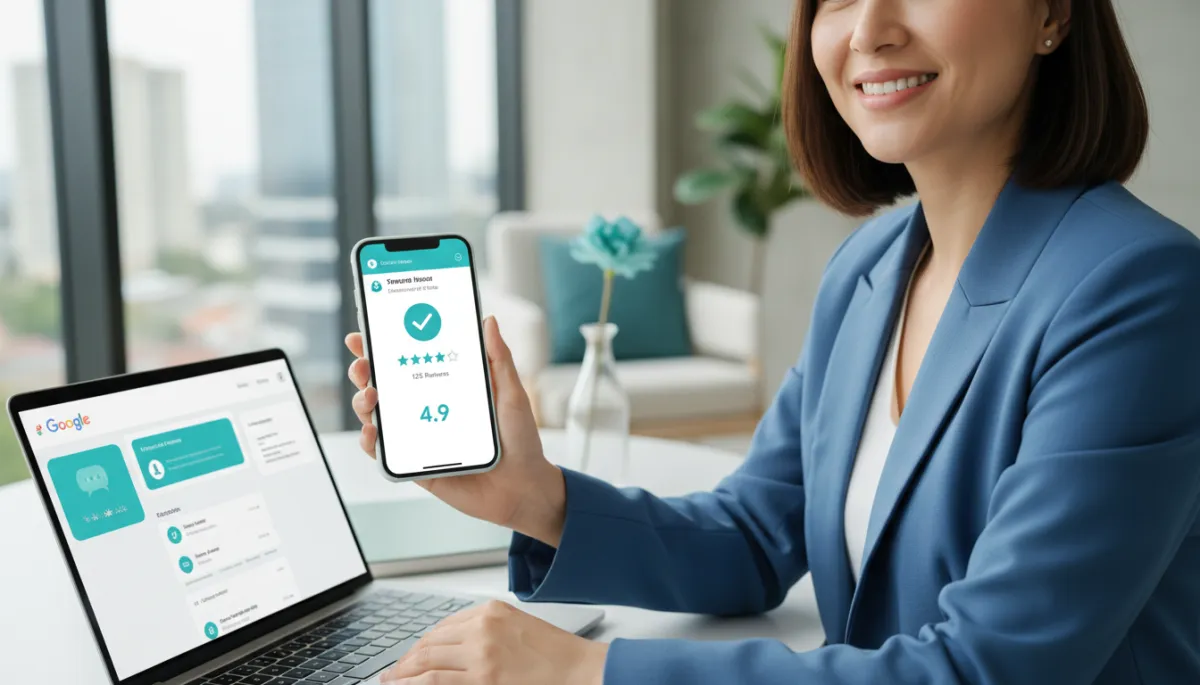
Close-up of a service business owner holding a smartphone that displays a verified Google...
A verified, active profile with steady reviews signals real-world trust to Google and customers.
Step 6: Profile Optimization for Maximum Local Search Visibility
Once your Google Business Profile is verified, the real Local SEO work begins. Profile optimization is about turning a basic listing into a rich, trustworthy resource that Google wants to show and customers want to choose. Google’s 2026 playbooks and best-practice guides all emphasize the same principle: complete, accurate, and active profiles win (support.google.com, searchengineland.com).
Craft a Clear, Keyword-Aware Business Description
Your description should explain who you are, what you do, and whom you serve, using natural language that includes your main services and location. Avoid keyword stuffing or exaggerated claims. For example:
“Family dental clinic in Austin providing preventive care, cosmetic dentistry, and same-day emergency appointments. We focus on gentle treatment, clear communication, and long-term oral health for adults and children.”
Use Categories, Services, and Attributes Strategically
Primary category: Choose the most specific, accurate category available (e.g., “Criminal justice attorney” instead of just “Lawyer”).
Secondary categories: Add a few closely related categories when relevant (for example, “Cosmetic dentist” plus “Dental clinic”), but avoid unrelated options just to appear in more searches.
Services and products: List your core offerings with concise descriptions and pricing where appropriate. This helps Google match you to more specific local searches.
Attributes: Add attributes such as “wheelchair accessible,” “women-owned,” “LGBTQ+ friendly,” or “accepts new patients” to answer common questions at a glance.
Keep Visuals Fresh with High-Quality Photos and Videos
Google recommends adding real, high-quality photos regularly to improve engagement and ranking. Aim to upload new visuals at least weekly: exterior shots, interior spaces, staff photos, before-and-after work (where allowed), and menu or service boards. For clinics and law firms, focus on professionalism and privacy; avoid sharing identifiable client details without explicit consent.
Use Posts, Q&A, and Messaging to Drive Engagement
Google Posts: Share updates, offers, seasonal tips, and event announcements at least twice per month. This keeps your profile active and gives searchers timely reasons to contact you.
Q&A: Proactively add common questions and clear, branded answers—“Do you accept walk-ins?” “Do you offer payment plans?” This both improves conversions and supports Local SEO by matching long-tail searches.
Messaging: If you enable messaging, respond promptly. Slow or inconsistent responses can damage trust even if they do not directly affect ranking.
Step 7: Build Local Search Visibility Through Reviews and Reputation
In 2026, reviews are one of the strongest prominence signals for Local SEO. Google’s documentation and independent studies consistently show that the volume, recency, and consistency of reviews strongly influence which businesses appear in the Map Pack. For trust-based services—healthcare, legal, real estate, home services—reviews are also the single biggest factor in consumer choice.
Ask for Reviews the Right Way—No Shortcuts, No Incentives
Google strictly prohibits offering incentives or discounts in exchange for reviews, and fake or purchased reviews can lead to removal or suspension. ReviewNix, as a reputation management platform, is built around this principle: no fake reviews, no manipulation, no shortcuts. Instead, focus on systematic, compliant review requests:
Send a polite SMS or email after each completed visit or service, linking directly to your Google review form.
Make it easy for happy customers to respond while the experience is fresh—ideally within 24 hours.
For clinics and firms, train front-desk or intake staff to mention how much reviews help other local people find trustworthy providers.
Respond Professionally to Every Review
Google explicitly recommends responding to reviews as part of their Local SEO guidance (support.google.com). Thoughtful responses show that you value feedback and are actively engaged. For negative reviews, respond calmly, respect privacy (especially in healthcare and legal contexts), and invite the reviewer to continue the conversation offline if needed.
ReviewNix helps local businesses handle this at scale by sending automated, compliant review requests via SMS, email, and WhatsApp, then using AI-assisted responses to reply to each review in a professional, brand-consistent tone. This keeps your Google Business Profile active, credible, and aligned with Google’s policies—without manual chasing from your team.
Step 8: Maintain, Audit, and Refine Your Profile Regularly
Setting up and claiming your Google Business Profile correctly is only the beginning. Local SEO is an ongoing process. Google and leading experts recommend regular audits to ensure your information, Service Area, and content remain accurate and competitive (thesearchsherpa.com, myreputation.ie).
Monthly: Check for suggested edits from users, update photos, add new posts, and review your Q&A section.
Quarterly: Audit all fields—categories, services, attributes, hours, and Service Area—to ensure they reflect your current operations and strategy.
Annually: Compare your profile against comprehensive optimization checklists (often 22–47 points) to identify missed opportunities for Local SEO improvements.
📌 Key Takeaway: A stagnant profile slowly loses visibility. A living, well-maintained profile—with fresh reviews, posts, and accurate data—earns and keeps top local rankings.
Related: the Google Business Profile optimization checklist.
Bringing It All Together: A System for Local SEO, Not a One-Time Task
To set up and claim your Google Business Profile correctly in 2026, you need more than a quick listing. You need a clear process:
Prepare accurate, consistent business information and decide whether you are a storefront, a service-area business, or both.
Create or claim your Google Business Profile using your legal name and most specific category.
Configure your location and Service Area honestly to match how you actually serve customers.
Complete all core details—phone, website, hours, services, and attributes—with precision and consistency across the web.
Follow the correct Business Verification path without cutting corners or repeatedly restarting the process.
Invest in ongoing profile optimization: descriptions, categories, services, photos, posts, and Q&A that reflect your real strengths and specialties.
Build and protect your reputation with a steady stream of authentic reviews and professional responses that demonstrate how you treat your customers.
For many local business owners, especially in healthcare, legal, and home services, doing all of this manually is unrealistic. Staff are focused on patient care, cases, or on-site work—not Local SEO workflows, review requests, and daily profile checks. That is exactly where a done-for-you system like ReviewNix becomes valuable.
ReviewNix automates the reputation side of Local SEO while respecting every guideline that matters. After each service, we send compliant review requests via SMS, email, and WhatsApp, route satisfied customers to your Google Business Profile, and help you respond to every review with AI-assisted, human-sounding replies. At the same time, we keep your profile active, accurate, and aligned with Google’s rules—no fake reviews, no incentives, no manipulation. Just genuine local search visibility built on real customer experiences.
Next Step: Start Building Your Reputation System Today
Whether you are opening a new practice, expanding into a second location, or trying to revive an underperforming listing, the path is the same: set up and claim your Google Business Profile correctly, verify it without shortcuts, and then support it with a consistent, authentic reputation system. When you do, Local SEO becomes less about chasing algorithms and more about accurately reflecting the excellent service you already deliver every day.
If you are ready to turn your Google Business Profile into a reliable source of calls, bookings, and trust—without adding more manual work to your team—let ReviewNix help you put that system in place. Your future customers are already searching on Google today. Make sure they find a verified, optimized, and well-reviewed profile when they do, and start building your reputation system today.